


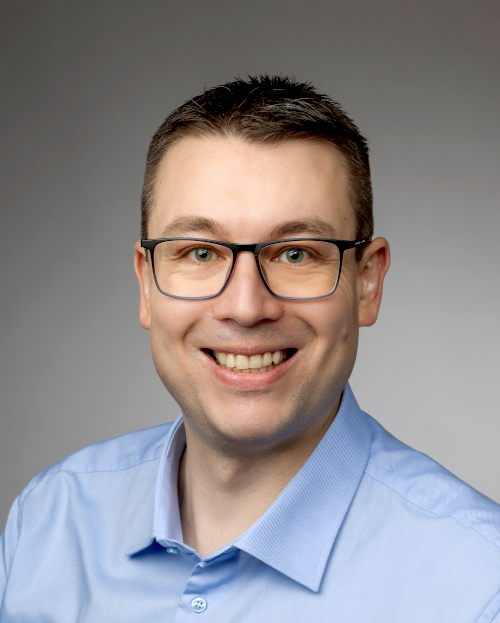
Christian Laubichler
LEC Large Engines Competence Center
As a data scientist and team leader for “Data Analytics” at LEC, one of Christian Laubichler’s main goals is to gain insight into the performance and condition of large internal combustion engines and their key components by utilizing the ever-increasing amount of available data. Along with modern data analytics approaches, such as machine learning, he often uses statistical methods, supported by his strong background in statistics and his MSc in Technical Mathematics. However, he is not only concerned with analyzing and modeling data, but also with how large internal combustion engines can benefit from the ongoing digitalization in general. His experience across diverse fields—including animal health, environmental science, finance, and information security—often helps him think outside the box and approach complex challenges from a broader perspective.
Advanced methods for condition monitoring and control of large engines in maritime applications
Addressing global challenges such as climate change, environmental pollution, and resource conservation, the technical development of large internal combustion engine (ICE) technology for maritime applications is inherently multifaceted. Key measures include adopting alternative fuels, integrating carbon capture systems, and applying predictive maintenance to avoid premature component replacement. These approaches require a thorough understanding of engine operation and component condition.
Condition monitoring (CM) of large ICEs is undergoing a significant transformation itself. Advanced data analytics methods, particularly artificial intelligence (AI) and machine learning (ML), provide enhanced insights, improved fault detection, and increased operational reliability. New CM techniques, such as telemetry-based sensing, allow for the in-depth monitoring of critical components. Recent advances in edge-based ML facilitate real-time data evaluation and improve system resilience. The potential of all these approaches is demonstrated through selected applications in both field operation and engine development.